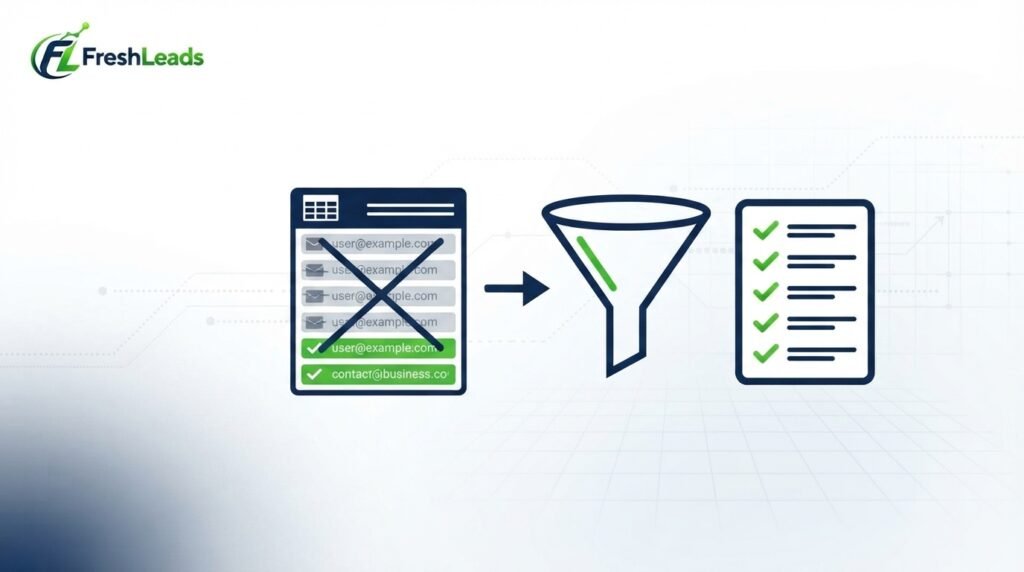
When comparing email list vs contact database options for your outreach, most marketers assume they’re the same thing. They aren’t. An email list and a contact database are built differently, priced differently, and used for different goals inside a sales or marketing strategy. Understanding this email list vs contact database distinction can save you money, protect your sender reputation, and help you pick the right data for your next campaign.
In this guide, we will break down what separates an email list from a contact database, when to use each one, and how to make sure whichever you choose actually helps you close more deals.
What Is an Email List?
An email list is exactly what it sounds like: a collection of email addresses, usually gathered for one specific purpose, such as a newsletter signup, a lead magnet download, or a cold outreach campaign. Email lists are often narrow by design. They might include just a name and an email address, sometimes with a company name attached.
Most email lists are built around a single channel. You collect the address, you send emails, and that is the extent of the relationship the data supports. This makes email lists fast to use but limited in depth. If your campaign strategy depends only on email, a good verified list from a business email list or targeted email list can get you moving quickly.
What Is a Contact Database?
A contact database is a much broader asset. It typically holds multiple data points about each person or company, such as job title, phone number, company size, industry, location, and sometimes even social profiles or intent signals. Rather than supporting a single channel, a contact database is built to support multi channel outreach: email, phone, LinkedIn, and direct mail can all pull from the same record.
Contact databases are the foundation of account based marketing and structured sales pipelines. Sales teams rely on them because a single record can answer several questions at once: who the person is, what they do, and how to reach them through more than one route. A phone number list paired with verified emails inside a contact database gives your sales reps far more flexibility than an email address alone.
Email List vs Contact Database: Key Differences at a Glance
The clearest way to separate the two is by purpose, depth, and lifespan.
An email list is usually purpose built for a single campaign or channel. It ages quickly because people change jobs and addresses often stop working within a year. A contact database, on the other hand, is meant to be a living resource. It is refreshed and enriched over time, and because it holds more identifying details, it stays useful even after one specific email address goes stale, since a sales rep can often locate the same person through a phone number or a new role.
Depth is another major difference. An email list rarely goes beyond name, email, and maybe a company name. A contact database usually includes firmographic data such as company revenue, employee count, and technology stack, alongside personal data such as title and seniority level. This extra depth is what allows for real segmentation rather than a blanket blast to everyone on the list.
Cost and maintenance also separate the two. Email lists are cheaper because they hold less information and require less verification work. Contact databases cost more because every additional data point needs to be sourced and checked, but that investment usually pays off in higher response rates and fewer wasted outreach attempts.
Which One Should You Use?
The right choice depends on your goal. If you are running a straightforward email campaign such as a product announcement or a newsletter, a clean, verified email list is often enough. It is affordable, quick to deploy, and does the job without extra complexity.
If you are building a full sales pipeline, running account based marketing, or trying to reach decision makers through more than one channel, a contact database is the smarter investment. It gives your team the flexibility to switch tactics without starting from zero every time an email bounces.
Many growing businesses end up needing both. They use a consumer email list for broad product marketing while relying on a richer contact database for high value B2B accounts. If your target audience is unusual or highly specific and you cannot find it in an off the shelf list, it is worth requesting a custom quote so the data is built around exactly who you need to reach.
Data Quality Matters More Than the Label
Regardless of which one you choose, the label matters far less than the quality behind it. An email list full of outdated addresses will hurt your deliverability just as much as a poorly maintained contact database. Before buying either, check how often the data is verified, whether it is compliant with GDPR and CAN-SPAM, and whether the provider offers a sample so you can test accuracy before committing to a larger purchase.
If you are still unsure which format fits your campaign, reach out through FreshLeads’ contact page and describe your goal. A quick conversation can save you from buying the wrong type of data and starting your campaign on the wrong foot.
Frequently Asked Questions
Is a contact database more expensive than an email list?
Generally, yes. A contact database includes more data points per record, such as phone numbers, job titles, and firmographic details, which require more work to source and verify. This added depth usually costs more than a simple email list but often delivers a better return through higher quality outreach.
Can I use an email list for phone or LinkedIn outreach?
Not directly. A standard email list typically only contains an email address and maybe a name, so it will not support phone or social outreach. For multi channel campaigns, you need a contact database that includes additional fields like phone numbers and professional profiles.
How often should a contact database be updated?
Ideally every few months, since job changes, company moves, and email address updates happen constantly. A database that is not refreshed regularly loses accuracy fast, which is why verified and routinely updated sources matter more than the size of the list.